★
Loading archive…
Loading archive…
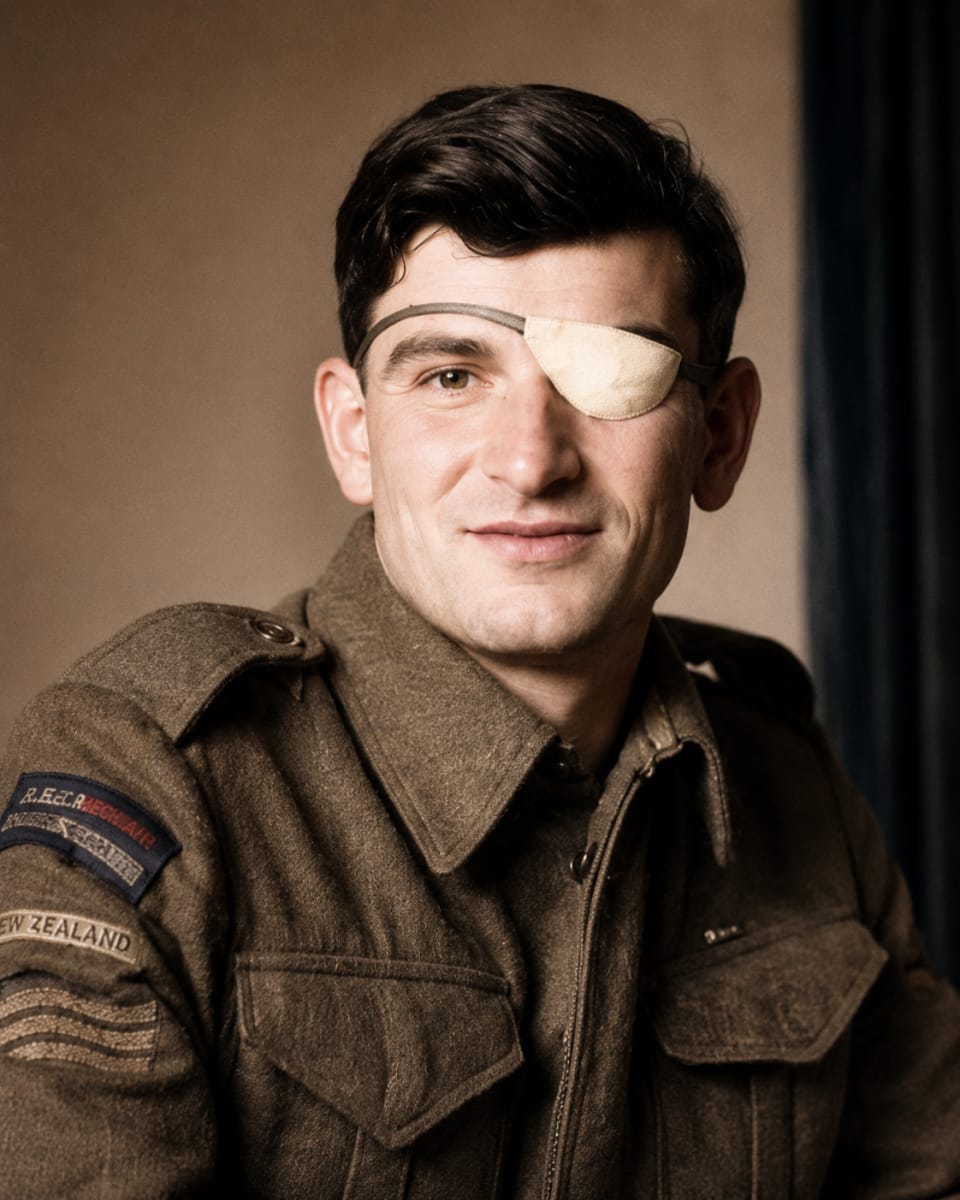
Major WW2, Canadian Army
Support & adopt this hero ↓
He parachuted behind enemy lines to aid the armed Partisans.
William Morris Jones was a Canadian veteran whose military career linked the trenches of the First World War with clandestine operations in occupied Yugoslavia. Born in 1895 and associated with Bear River and Digby, Nova Scotia, he had worked as a Sunday-school teacher and considered becoming a medical missionary before joining the Canadian forces. He served with the 13th Battalion, the Royal Highlanders of Canada, under service number 46282.
His first Distinguished Conduct Medal recognized an attack following a mine explosion. He led men into the newly formed crater despite rifle, machine-gun and artillery fire, and was also commended for skilled patrols and reconnaissance. The citation appeared in the London Gazette on 11 March 1916. His bar recognized later leadership: he corrected the direction of advancing troops, led them to their objective, reconnoitred and established an outpost line, then organized a party that repelled an enemy bombing attack along a communication trench. He remained on duty until wounded thirty-six hours after the advance. These official citations are transcribed in the Canadian Expeditionary Force DCM register held by the 48th Highlanders Museum, https://museum.48thhighlanders.ca/wp-content/uploads/2023/12/DCM_CEF.pdf.
Jones was repeatedly wounded and lost his left eye. He nevertheless rose from the ranks to captain before demobilization. When the Second World War began, he tried to enter flying service, reportedly passing an eye test by memorizing its chart before his disability was discovered. He travelled to Britain as a merchant seaman and subsequently served in the Royal Air Force as an instructor. A posting to the Middle East brought him into contact with the organization that became his route back to active operations.
Transferred to the British Army as a major, he joined the Special Operations Executive. In May 1943 he parachuted into occupied Croatia and established liaison with the Partisans. He worked among their commanders in Slovenia, reported military conditions and helped connect their resistance with Allied support. His own account, Twelve Months With Tito's Partisans, describes negotiations with Italian commanders and the disarming of Italian formations after the September 1943 armistice.
After the war he wrote and spoke about his experiences and his admiration for the resistance fighters with whom he had lived. He died in 1969. His memoir remains a firsthand record of an Allied liaison officer's work alongside the Partisans.
Become the named supporter for this profile and edit the tribute biography and portrait (Owner account required). Proceeds help keep the archive online.
$25 USD / year — annual sponsorship renewal. Keeps the page online and, where enabled, the family anniversary remembrance emails active.