★
Loading archive…
Loading archive…
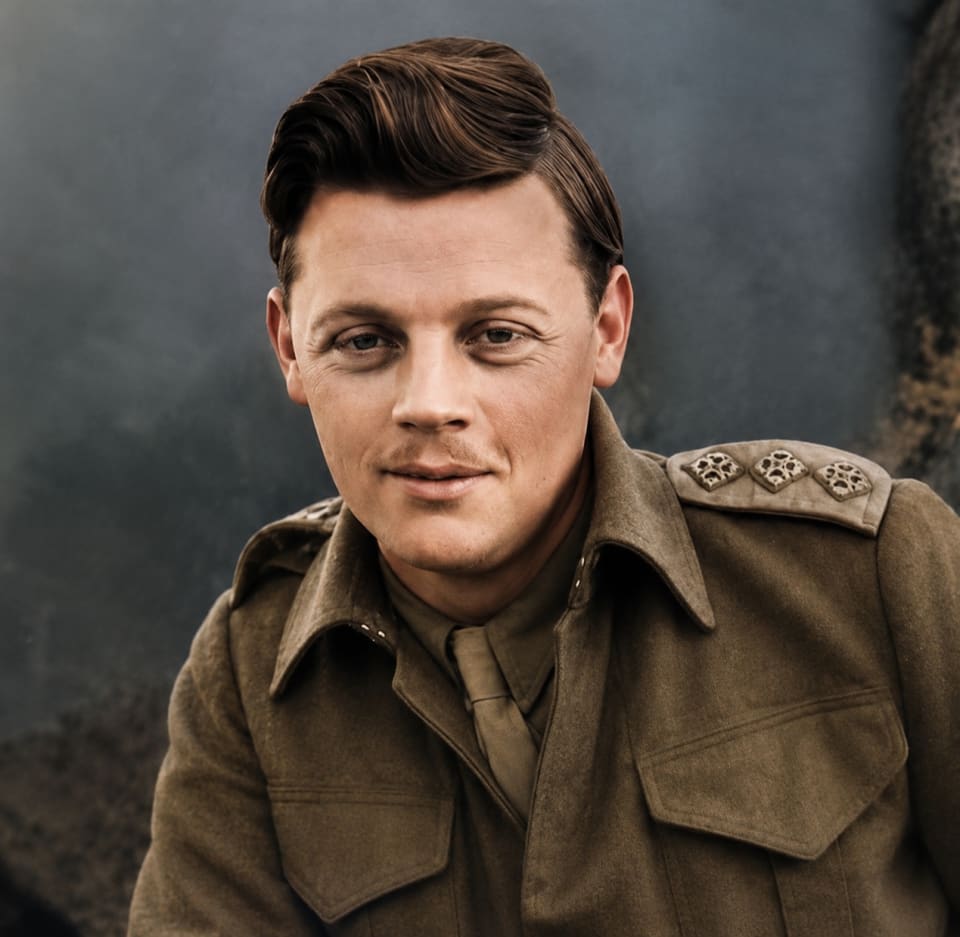
Captain, Canadian Army
Support & adopt this hero ↓
Canadian Author, Second World War Veteran and Environmentalist
Before Farley Mowat became the celebrated voice of Canada’s wolves, whales and northern wilderness, he was a young infantry officer walking into battle beneath the burning skies of Sicily. The war would follow him for the rest of his life, shaping not only the man he became but also some of the most powerful writing ever produced by a Canadian veteran.
Farley McGill Mowat, OC, was born in Belleville, Ontario, on 12 May 1921. The son of librarian and writer Angus Mowat, he developed an early fascination with birds, animals and the wild places beyond Canada’s cities. While growing up in Saskatchewan, he studied the natural world, collected specimens and began writing about birds. He later enrolled in zoology at the University of Toronto, but the outbreak of the Second World War interrupted the scientific career he initially imagined for himself.
Mowat joined the Canadian Army and became an officer with the Hastings and Prince Edward Regiment, widely known as the Hasty Ps. On 10 July 1943, he landed in Sicily during Operation Husky as a lieutenant commanding an infantry platoon. He marched and fought across the island, participated in the ascent of Monte Assoro and then continued into mainland Italy. By late 1943, he had experienced the Moro River fighting and the terrible battle around Ortona, where heavy casualties and the deaths of close comrades took a severe psychological toll.
But what happens when a young naturalist is required to become a combat soldier? For Mowat, the answer emerged slowly. After his period as a platoon commander, he became the regiment’s intelligence officer, maintaining detailed operational records while the Canadian Army advanced through Italy and later into North-West Europe. Those wartime diaries helped preserve the experiences of the Hasty Ps and eventually contributed to books including The Regiment, My Father’s Son, Aftermath and his deeply personal combat memoir, And No Birds Sang.
Published in 1979, And No Birds Sang followed Mowat from youthful enthusiasm into the fear, exhaustion and grief of close combat. It was not written as a conventional story of battlefield glory. Instead, it examined how war stripped away innocence and left lasting psychological wounds. The Canadian Army later included the book on its professional reading list, describing it as Mowat’s account of close combat with German forces in Sicily and Italy.
After returning to Canada, Mowat resumed his studies and undertook fieldwork in the Arctic. His encounters with northern landscapes, wildlife and Indigenous communities provided material for People of the Deer, published in 1952. That book launched a literary career that would make Farley Mowat one of the most widely read Canadian authors in history. His later works included Lost in the Barrens, Never Cry Wolf, Owls in the Family, The Dog Who Wouldn’t Be, The Grey Seas Under, The Boat Who Wouldn’t Float and Sea of Slaughter.
Mowat’s writing asked readers to see animals and wilderness differently. Wolves were not simply predators, whales were not merely resources, and the Arctic was not an empty frontier. His books gave personality and urgency to creatures and communities that he believed were being ignored, exploited or destroyed. His passionate approach helped bring environmental issues to an enormous international audience, with more than 17 million copies of his books sold and translations published in 52 languages.
His methods also generated controversy. Critics questioned the factual precision of some books and objected to his blending of observation, memory and storytelling. Mowat never presented himself as a detached academic writer. He sought to communicate what he believed was a deeper emotional and environmental truth. That approach divided critics, but it also made his work accessible to millions of readers who might never otherwise have cared about wolves, whales, caribou or the Canadian North.
In 1981, Farley Mowat was appointed an Officer of the Order of Canada. His official citation recognized him as a novelist and naturalist, praised the passionate concern for endangered wildlife expressed through his books, and noted the remarkably wide international readership his writing had achieved. The appointment was announced on 22 June 1981, and he was invested on 21 October of that year.
Mowat’s wartime and national service were also reflected in the honours displayed on his ribbon rack. His Second World War group recognized service in Sicily, Italy and North-West Europe, while later Canadian commemorative medals marked his long public contribution to the country. These campaign and commemorative medals were granted through qualifying service or official selection and therefore did not carry individual narrative citations like his Order of Canada appointment.
Farley Mowat died on 6 May 2014, six days before his ninety-third birthday. He left behind far more than a collection of popular books. He gave Canadian wildlife a defender, the North an international audience and generations of veterans a painfully honest account of what combat could do to a young soldier. Whether writing about a battlefield, a wolf den, a storm-tossed rescue ship or the silence of the Arctic, Mowat demanded that his readers look again at the lives and landscapes they had learned to overlook.
Become the named supporter for this profile and edit the tribute biography and portrait (Owner account required). Proceeds help keep the archive online.
$25 USD / year — annual sponsorship renewal. Keeps the page online and, where enabled, the family anniversary remembrance emails active.