★
Loading archive…
Loading archive…
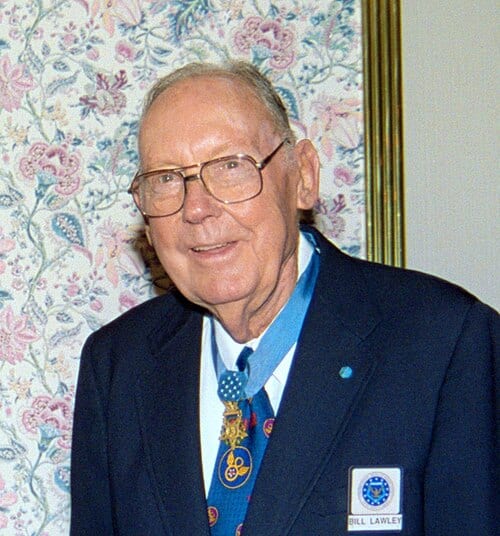
Colonel, U.S. Air Force
Support & adopt this hero ↓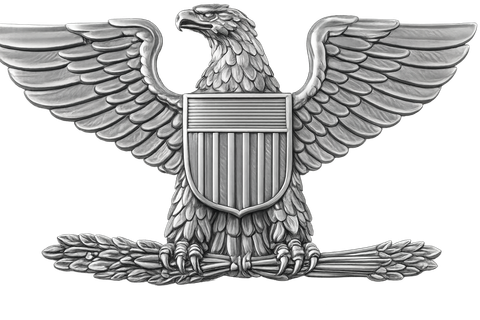
He could have abandoned his crippled bomber and saved himself. But two of his wounded crewmen had no way to escape. On 20 February 1944, First Lieutenant William Robert Lawley Jr., a young American B-17 Flying Fortress pilot, made an extraordinary decision in the skies over Nazi-occupied Europe. Rather than leave his helpless comrades behind, he chose to risk his own life to bring them home. That decision would earn him the Medal of Honor, America's highest military decoration for valor.
Born on 23 August 1920 in Leeds, Alabama, William Robert Lawley Jr. graduated from high school in 1938 and entered the United States Army Air Forces in 1942. After earning his pilot's wings and commission in April 1943, he was assigned to the 364th Bombardment Squadron, 305th Bombardment Group, Eighth Air Force, operating from RAF Chelveston in England. By February 1944, he was flying dangerous bombing missions against German industrial targets during World War II.
His defining moment came on 20 February 1944, during Big Week, the Allied air offensive against Germany's aircraft industry. Returning from a bombing raid on Leipzig, Lawley's B-17 was attacked by approximately twenty German fighters. His copilot was killed, eight crewmen were wounded, and the bomber plunged out of formation with an engine burning and its controls badly damaged. Lawley himself suffered severe facial wounds. With blood obscuring his vision, he pushed his fallen copilot away from the controls and pulled the aircraft out of a steep dive using only his left hand.
But the worst was not over. The bomb-release mechanism had failed, leaving the aircraft dangerously burdened with its bombs. Lawley initially ordered the crew to bail out, only to learn that two critically wounded men could not parachute to safety. He faced an agonizing choice: escape or attempt the seemingly impossible journey back to England. His official Medal of Honor citation records that he "elected to remain with the ship." Despite renewed enemy attacks, spreading engine fires, and serious blood loss, he refused to abandon his men. He eventually collapsed from exhaustion but was revived by his bombardier and returned to the controls. With engines failing, he successfully crash-landed at an English fighter airfield, saving the wounded crewmen who could not escape.
For this extraordinary act of courage and airmanship, Lawley received the Medal of Honor under War Department General Orders No. 64, dated 8 August 1944. Lieutenant General Carl A. Spaatz personally presented the decoration in England. His combat wounds were recognized by the Purple Heart, while his distinguished flying service earned him the Air Medal with one Bronze Oak Leaf Cluster, representing two awards. He completed fourteen combat missions by June 1944. His wartime service also included the American Campaign Medal, European-African-Middle Eastern Campaign Medal, and World War II Victory Medal. He also qualified for the Presidential Unit Citation through his service with the 305th Bombardment Group.
Lawley's dedication did not end with World War II. He continued serving after the United States Air Force became an independent branch in 1947, building a distinguished career in aviation, command, diplomacy, and military education. He served as Assistant Air Attaché in Brazil, commanded the 55th Air Refueling Squadron, and later held senior assignments at the Air War College. His squadron received an Air Force Outstanding Unit Award during his command period. His subsequent assignments included diplomatic service in the Philippines. His extended military career was further recognized by the Legion of Merit, National Defense Service Medal, and Air Force Longevity Service Award.
Promoted to colonel in March 1959, Lawley retired in 1972 after approximately thirty years of military service. He died in Montgomery, Alabama, in May 1999 and was laid to rest at Greenwood Cemetery.
Colonel William Robert Lawley Jr. is remembered not simply as a World War II Medal of Honor recipient or a highly decorated American aviator, but as a leader whose courage was measured by the lives he refused to leave behind. His story remains a powerful reminder that true heroism is sometimes found in one impossible decision: choosing the safety of others when survival itself seems beyond reach.
Become the named supporter for this profile and edit the tribute biography and portrait (Owner account required). Proceeds help keep the archive online.
$25 USD / year — annual sponsorship renewal. Keeps the page online and, where enabled, the family anniversary remembrance emails active.