★
Loading archive…
Loading archive…
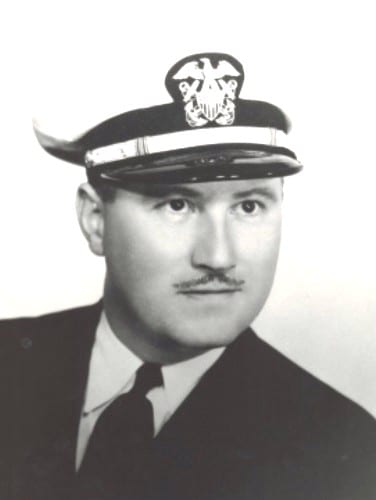
Lieutenant, U.S. Navy
Support & adopt this hero ↓
A boiler-room emergency aboard a United States Navy destroyer brought William Russel Huber face to face with a deadly wall of steam. While others faced the danger of a catastrophic accident, Huber entered the superheated fireroom without hesitation, risking his own life to rescue a fellow sailor. His extraordinary courage on 11 June 1928 would earn him the Medal of Honor, America's highest military decoration.
Born on 16 July 1902 in Harrisburg, Pennsylvania, William Russel Huber enlisted in the United States Navy in Philadelphia on 14 September 1920. Through dedication and professional service, he advanced to the rate of Machinist's Mate First Class. His defining act of heroism occurred aboard USS Bruce at the Norfolk Navy Yard, Virginia. Following a boiler accident that filled the fireroom with deadly steam, Huber entered the compartment despite the grave danger and carried Charles H. Byran to safety through almost superhuman effort. Although suffering severe and dangerous burns to his arms and neck, he returned into the steam-filled compartment in an attempt to render further assistance. His extraordinary courage, determination and complete disregard for his own safety distinguished him as a remarkable example of naval heroism.
For this act, Huber received the Medal of Honor. President Calvin Coolidge personally presented the decoration at the White House on 15 December 1928. The official citation recognized his extraordinary heroism in the line of his profession and concluded that his courage, grit and determination were far above and beyond the call of duty.
Huber continued his naval career for many years, ultimately attaining the commissioned rank of Lieutenant. During the Second World War, he served aboard USS Medusa at Pearl Harbor during the Japanese attack of 7 December 1941. He later survived the sinking of the aircraft carrier USS Lexington during the Battle of the Coral Sea in May 1942. His wartime service reflected a career that extended well beyond the extraordinary rescue that had first brought him national recognition.
After nearly three decades of naval service, Huber retired on 1 June 1948. He died on 25 January 1982 in San Mateo, California, and was laid to rest at Golden Gate National Cemetery in San Bruno, California.
William Russel Huber's legacy is defined by a moment when professional duty became an extraordinary act of self-sacrifice. His rescue aboard USS Bruce remains a powerful reminder that courage is measured not by the absence of danger, but by the willingness to face it for the sake of another.
Become the named supporter for this profile and edit the tribute biography and portrait (Owner account required). Proceeds help keep the archive online.
$25 USD / year — annual sponsorship renewal. Keeps the page online and, where enabled, the family anniversary remembrance emails active.