★
Loading archive…
Loading archive…
He crossed the trenches and scouted a breach before assault.
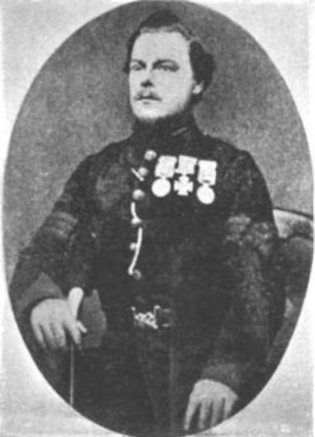
William Sutton came from Ightham in Kent and grew up among a family of agricultural labourers. The 1841 census places him with his older siblings near Borough Green. He entered the 60th Rifles in 1846 and went to India, where he became a bugler. His early service included the Punjab campaign of 1848–49, long before the fighting for which he received the Victoria Cross.
When the Indian uprising began in 1857, Sutton was serving with the 1st Battalion. The regiment joined the force besieging Delhi, occupying the ridge outside the city while facing repeated attacks. A bugler's duties carried particular importance in an army that used calls to transmit orders amid smoke, confusion and dispersed formations.
On 2 August Sutton went over the British trenches during a determined attack and killed an opposing bugler who was sounding a call. The deed was later included in the account supporting his Victoria Cross. His other cited action came on the night of 13 September, after British artillery had opened breaches in Delhi's defences. He volunteered to join the reconnaissance that would determine whether the broken walls could be assaulted.
The London Gazette of 20 January 1860, issue 22347, page 178, commends his willingness "to reconnoitre the breach" and records that he was elected by the regiment's privates (https://www.thegazette.co.uk/London/issue/22347/page/178/data.pdf). The dangerous inspection preceded the assault on the following morning. Sutton was wounded on 14 September and was eventually invalided home, leaving the army in August 1858 as unfit for further service.
Queen Victoria presented his Cross at Windsor Castle on 9 November 1860. He later married Eliza and worked as a labourer. By 1871 he was living in Rotherhithe with four children. In 1872 he obtained a replacement Cross after the original was lost. Following his wife's death he lived with relatives at Halling and worked for a bricklayer.
His later years ended in poverty. He died in the Malling Union Workhouse on 16 February 1888 and was buried in an unmarked grave at St Peter's, Ightham. His replacement Victoria Cross is preserved by the Royal Green Jackets museum in Winchester, while a church memorial recalls his connection with the village.
Become the named supporter for this profile and edit the tribute biography and portrait (Owner account required). Proceeds help keep the archive online.
$25 USD / year — annual sponsorship renewal. Keeps the page online and, where enabled, the family anniversary remembrance emails active.