★
Loading archive…
Loading archive…
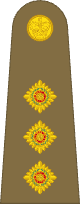
Captain Cyril Hubert Frisby VC
Cyril Hubert Frisby was born at New Barnet, Hertfordshire, on 17 September 1885. Educated at Haileybury College, he later became a member of the London Stock Exchange and was also an accomplished middle-distance runner. In 1913, he finished as the highest-placed British athlete in the Amateur Athletic Association’s 880-yard championship. (VC and GC Association)
Frisby entered the British Army during the First World War, initially serving as a private in the Hampshire Regiment. He was soon selected for officer training and was commissioned into the Coldstream Guards in 1917. Posted to the Western Front with the 1st Battalion, Coldstream Guards, he had risen to acting captain by the final year of the war. (Wikipedia)
On 27 September 1918, during the Battle of the Canal du Nord near Graincourt, France, Frisby commanded a company ordered to capture a crossing on the Demicourt–Graincourt road. As his leading troops approached the canal, they were stopped by devastating machine-gun fire from a strongly defended German position beneath an old iron bridge on the opposite bank. Reinforcing the advance failed to break the resistance, and the entire operation was in danger of being halted.
Recognizing that the machine-gun post had to be silenced, Frisby called for volunteers. Accompanied initially by Lance-Corporal Thomas Norman Jackson and two other Coldstream Guardsmen, he forced his way through the wire, climbed down into the canal and advanced under intense, point-blank fire. Other soldiers followed their example, and the party stormed the enemy position, capturing approximately twelve German soldiers and two machine guns.
Frisby was wounded in the leg by a bayonet during the fighting but refused to leave his command. After restoring the advance and consolidating his company’s objective, he went to the assistance of the neighbouring company, which had lost all of its officers and sergeants. He reorganized its surviving soldiers, strengthened their defences and helped them defeat a heavy German counterattack.
His official Victoria Cross citation declared:
“For most conspicuous bravery, leadership and devotion to duty in action on the 27th September, 1918, across the Canal du Nord, near Graincourt.”
The citation praised Frisby for leading the attack under annihilating machine-gun fire, capturing the enemy post and subsequently organizing the defence of the adjoining company despite his wound. His Victoria Cross was announced in Supplement 31034 of The London Gazette, published on 26 November 1918. (The Gazette)
Lance-Corporal Jackson, who had been among the first to follow Frisby into the canal, was later killed in the fighting and was awarded the Victoria Cross posthumously for his part in the action. Frisby received his own VC from King George V at Buckingham Palace on 29 March 1919. Jackson’s family attended the same ceremony, and Frisby was able to explain personally the courage Jackson had displayed during their attack. (Wikipedia)
After the war, Frisby became one of Britain’s best-known big-game fishermen. He participated in international angling competitions and became especially famous for catching Atlantic bluefin tuna off the Yorkshire coast. During one extraordinary day in the 1930s, he reportedly landed five tuna, including a specimen weighing 659 pounds—approximately 299 kilograms. (The Times)
Frisby also remained active in veterans’ affairs and served as president of his local branch of the British Legion. His wife, Audrey, died in 1960. Cyril Hubert Frisby died at his home in Guildford, Surrey, on 10 September 1961, one week before his seventy-sixth birthday.
He was buried beside his wife in Plot 28 of Brookwood Cemetery, Surrey. His grave was later cleaned and restored as part of a programme honouring the Victoria Cross recipients buried there. (brookwoodcemetery.com)
Frisby’s medal group, including his Victoria Cross, British War Medal, Victory Medal with Mentioned-in-Despatches emblem, Defence Medal and the 1937 and 1953 Coronation Medals, was donated by his son to the Coldstream Guards. The medals are preserved at the regiment’s headquarters at Wellington Barracks in London. (Wikipedia)
Become the named supporter for this profile and edit the tribute biography and portrait (Owner account required). Proceeds help keep the archive online.
$25 USD / year — annual sponsorship renewal. Keeps the page online and, where enabled, the family anniversary remembrance emails active.
