★
Loading archive…
Loading archive…
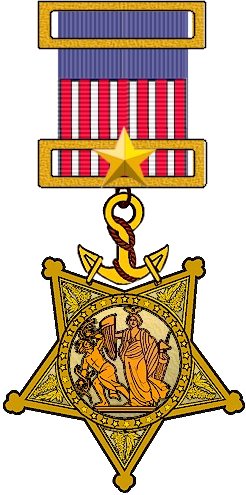
Quarter Gunner, U.S. Navy
Support & adopt this hero ↓
Naval Courage Under Fire at Fort Fisher
Daniel Scammon Milliken (c. 1838 – May 3, 1899) was a United States Navy sailor and Medal of Honor recipient who distinguished himself during the American Civil War. Serving as a Quarter Gunner aboard the Union ironclad USS New Ironsides, he was recognized for his meritorious conduct during the naval assaults against Fort Fisher, North Carolina, on December 24–25, 1864, and January 13–15, 1865. His service contributed to one of the Union Navy's most important operations during the final months of the Civil War.
Milliken was born around 1838 in Saco, York County, Maine. Little reliable documentation survives concerning his childhood, education, and early civilian occupation. At some point during the American Civil War, he entered the United States Navy, with his enlistment officially accredited to New York. He eventually served aboard USS New Ironsides, one of the Union Navy's most heavily armed and formidable ironclad warships.
USS New Ironsides was a steam-powered, armored broadside warship constructed in Philadelphia and commissioned in August 1862. Designed to engage fortified coastal positions and enemy vessels, the ship combined heavy artillery with substantial protective armor. Its principal armament included fourteen 11-inch Dahlgren smoothbore guns, supported by additional heavy rifled cannon.
Milliken served with the rating of Quarter Gunner, a naval position associated with the operation and maintenance of a warship's artillery. Such duties formed an essential part of naval combat, where disciplined gun crews were required to handle heavy ammunition, maintain their weapons, and deliver sustained fire under dangerous conditions.
During the later stages of the Civil War, the Union sought to eliminate the remaining Confederate supply routes along the Atlantic coast. Wilmington, North Carolina, became especially important because blockade-running vessels continued to use the port to transport military supplies and commercial goods into the Confederacy.
Fort Fisher, situated near the mouth of the Cape Fear River, protected the maritime approaches to Wilmington. Its extensive sand-and-earth fortifications, heavy artillery batteries, and commanding position made it one of the strongest Confederate coastal defenses. Capturing the fort would allow Union naval forces to close the principal southern entrance to the river and severely restrict Confederate access to Wilmington.
In December 1864, Rear Admiral David Dixon Porter assembled a powerful naval force to attack Fort Fisher. The operation was planned in cooperation with Union Army troops commanded by Major General Benjamin F. Butler. USS New Ironsides formed part of the ironclad division assigned to bombard the Confederate defenses and support the proposed land assault.
On December 24, 1864, the Union fleet began its first major bombardment of Fort Fisher. USS New Ironsides advanced close to the Confederate positions, taking a leading place among the ironclads. The vessel opened fire with its starboard battery, directing powerful shells against the fort's defensive works and artillery positions.
The concentrated bombardment continued on December 25. According to Milliken's official Medal of Honor citation, New Ironsides delivered accurate fire that caused fires and explosions within the Confederate fortifications and dismounted several enemy guns.
Operating close to hostile coastal artillery demanded considerable discipline and endurance from the ship's crew. The sailors were required to continue their duties while exposed to enemy fire and the hazards associated with repeatedly loading and firing large naval cannon.
Despite the intensity of the bombardment, the December expedition failed to capture Fort Fisher. Union Army commanders concluded that the defenses remained too strong for a successful assault, and the operation was abandoned. The Confederate garrison retained possession of the fort, allowing blockade-running activity around Wilmington to continue.
Union commanders organized a second expedition in January 1865. Major General Alfred H. Terry replaced Butler as commander of the principal land force, while Rear Admiral Porter again directed the naval operations. The renewed attack combined a large amphibious landing with a sustained bombardment intended to suppress the Confederate artillery before the infantry assault.
On January 13, 1865, USS New Ironsides returned to action against Fort Fisher. The ironclad moved into position near the Confederate defenses and immediately came under enemy fire.
Despite the danger, the ship continued fighting throughout the day. Its heavy guns contributed to the bombardment of Confederate artillery positions, defensive structures, and protected strongpoints. The sustained fire helped restrict the ability of the fort's defenders to operate their cannon effectively.
As darkness approached, the crew faced further difficulties. Severe winter weather complicated naval operations, while ammunition supplies had to be replenished to sustain the bombardment.
Milliken's Medal of Honor citation specifically records that New Ironsides continued fighting throughout January 13 and received additional ammunition during the night despite adverse weather conditions. The episode demonstrated the determination of the crew to maintain their ship's combat effectiveness during the prolonged engagement.
The bombardment continued on January 14 as Union infantry established positions north of Fort Fisher and prepared for the final attack. Navy warships maintained pressure on the Confederate defenses, directing their fire against artillery emplacements and the protective earthworks sheltering the garrison.
By January 15, the Union forces were ready to launch a coordinated assault. Confederate troops occupying protected bombproofs emerged to defend their positions against approaching Union soldiers and sailors.
At this critical stage, USS New Ironsides intensified its fire against the fort's artillery positions facing the attacking forces. According to the official Medal of Honor citation, the ironclad's battery disabled nearly every Confederate gun on the relevant face of the fort before the flagship ordered the naval bombardment to cease.
This powerful supporting fire helped reduce Confederate resistance during the assault. Although the naval landing force suffered severe casualties and was repulsed, Union Army troops succeeded in penetrating the fort's landward defenses.
After hours of fierce fighting, the Confederate garrison surrendered on the evening of January 15, 1865. The capture of Fort Fisher represented a decisive Union victory and effectively closed Wilmington's principal maritime approaches to Confederate blockade runners.
The loss of Fort Fisher weakened the Confederacy's ability to import military supplies and contributed to the capture of Wilmington by Union forces in February 1865. It also demonstrated the effectiveness of coordinated naval bombardment and infantry operations against heavily fortified coastal positions.
Milliken's service aboard USS New Ironsides during both attacks received official recognition. His performance as a Quarter Gunner formed part of the ship's distinguished record during the December 1864 and January 1865 operations.
On June 22, 1865, his Medal of Honor recognition was recorded under General Orders No. 59. The contemporary Navy Department record commended his highly meritorious conduct during the engagements against Fort Fisher.
Unlike recipients whose citations described individual land assaults or the capture of enemy flags, Milliken was recognized for his service aboard a naval warship engaged in sustained artillery operations. His achievement reflected the courage and discipline required of sailors operating heavy guns under hostile fire.
Following the Civil War, Milliken eventually returned to civilian life in Maine. Details of his later employment are limited in surviving published accounts, but local historical recollections associate him with the Raymond area, where he spent his remaining years.
A later account of his life, presented during a veterans' memorial ceremony, reported that he married twice and had no children. It also described his declining health during his later years and his struggle with consumption, an older medical term commonly used for tuberculosis.
Daniel Scammon Milliken died on May 3, 1899, in Raymond, Cumberland County, Maine. He was buried at Riverside Cemetery in East Raymond, where his grave became a place of remembrance for his military service and Medal of Honor.
More than a century after his death, the community of Raymond organized a special ceremony in his honor. On July 4, 2015, local officials, military veterans, historical reenactors, and community members gathered at Riverside Cemetery to recognize his Civil War service.
The ceremony included military honors, a commemorative wreath, and the dedication of a memorial stone bearing an image of USS New Ironsides and the historic Medal of Honor. The event renewed public recognition of Milliken's contribution to the Union Navy and the successful capture of Fort Fisher.
Daniel Scammon Milliken's legacy is inseparably connected with the naval operations against Fort Fisher in December 1864 and January 1865. Serving as a Quarter Gunner aboard USS New Ironsides, he participated in the heavy bombardments that weakened Confederate defenses and helped secure a major strategic victory for the Union.
His Medal of Honor remains a lasting recognition of his meritorious wartime conduct and represents the essential contribution of naval gun crews whose discipline, endurance, and courage helped determine the outcome of the American Civil War.
Become the named supporter for this profile and edit the tribute biography and portrait (Owner account required). Proceeds help keep the archive online.
$25 USD / year — annual sponsorship renewal. Keeps the page online and, where enabled, the family anniversary remembrance emails active.