★
Loading archive…
Loading archive…

Chief Boatswain, U.S. Navy
Support & adopt this hero ↓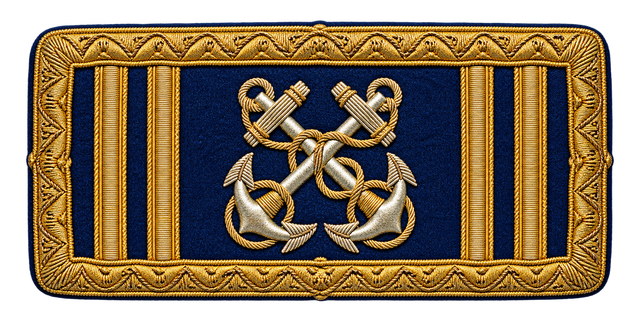
He sailed into enemy fire on a mission to block Santiago Harbor.
Daniel Montague volunteered for one of the Spanish-American War's most dangerous naval operations: taking USS Merrimac into Santiago de Cuba's defended harbor and deliberately sinking her across the entrance. Born on October 22, 1867, in Wicklow, Ireland, he entered enlisted service in the United States Navy on December 1, 1893. By 1898, he was Chief Master-at-Arms aboard USS New York.
Rear Admiral William T. Sampson approved the plan to block Admiral Pascual Cervera's Spanish squadron inside Santiago. Lieutenant Richmond P. Hobson commanded Merrimac, with Montague among seven volunteers. During the night of June 2–3, 1898, they entered the harbor under intense Spanish fire. The vessel's steering was disabled, frustrating the attempt to place her across the channel. Merrimac sank without completely obstructing the passage, but the crew's courage under fire earned lasting recognition.
All eight men survived and were captured on June 3. Montague remained a Spanish prisoner until his exchange on July 6, 1898, approximately 33 days later. He therefore did not fight in the naval Battle of Santiago de Cuba on July 3. While still in captivity, he was appointed Boatswain on June 15, 1898, entering the Navy's warrant officer corps.
Montague received the Medal of Honor under Navy General Order No. 529 of November 2, 1899. His award recognized extraordinary heroism during the Merrimac operation under heavy fire from Spanish batteries. His action rating was Chief Master-at-Arms, distinct from the Chief Boatswain rank he later attained.
He continued a professional naval career after the war. From August 1898 until late 1901, he served aboard the training ship USS Lancaster, followed by duty at the United States Naval Academy. In June 1903, he joined USS Wisconsin on the Asiatic Station. He advanced to Chief Boatswain on June 15, 1904 and became associated with USS Mohican around late 1904. Mohican reached Olongapo in the Philippines on February 4, 1905, rather than being stationed there during late 1904.
By summer 1906, Montague had returned to the United States for duty at Naval Station Pensacola. In fall 1909, he transferred to the Philadelphia Navy Yard. His final assignment in 1911–1912 was aboard USS Olympia at Norfolk while the cruiser was being prepared for service as a barracks ship.
Montague died on February 4, 1912, aged 44, while still in naval service, and was buried at the United States Naval Academy Cemetery in Annapolis. His legacy rests on the resolve of a sailor who volunteered to take a ship into enemy fire knowing that her destruction was the mission's purpose.
Become the named supporter for this profile and edit the tribute biography and portrait (Owner account required). Proceeds help keep the archive online.
$25 USD / year — annual sponsorship renewal. Keeps the page online and, where enabled, the family anniversary remembrance emails active.