★
Loading archive…
Loading archive…

Captain, British Army
Support & adopt this hero ↓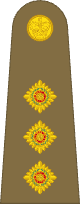
Cut off behind German lines with thirty men, no food and no water, George Sanders held his position for 36 hours on the bloodiest day in British military history. Born in New Wortley, Leeds, on 8 July 1894, George Sanders VC MC was educated at Little Holbeck School before becoming an apprentice fitter at the Airedale Foundry in Hunslet. He enlisted in the British Army on 9 November 1914 as Private 3203 in the 1/7th (Leeds Rifles) Battalion, West Yorkshire Regiment. Sanders went to France with his battalion on 16 April 1915 and rose through the ranks, becoming an Acting Corporal shortly before the Battle of the Somme.
On 1 July 1916, the first day of the Battle of the Somme, the 21-year-old Sanders went into action near Thiepval as the Leeds Rifles advanced into the fiercely contested Schwaben Redoubt. After entering the German trench system, he found himself isolated with thirty men and cut off from the main British force. Sanders immediately organised a defensive position, formed a bombing party and ordered his men to hold at all costs. For the next 36 hours they resisted repeated German attacks without food or water, having given their water to the wounded during the first night. Sanders also helped recover prisoners from German hands. When relief finally reached the position, he brought his party, now nineteen strong, safely back to the British lines. His leadership and determination during the fighting earned him the Victoria Cross.
The award appeared in the September 1916 supplement to *The London Gazette*, under a War Office notice dated 9 September. The official citation stated: "For most conspicuous bravery. After an advance into the enemy’s trenches, he found himself isolated with a party of thirty men. He organised his defences, detailed a bombing party, and impressed on his men that his and their duty was to hold the position at all costs. Next morning he drove off an attack by the enemy and rescued some prisoners who had fallen into their hands. Later two strong bombing attacks were beaten off. On the following day he was relieved after showing the greatest courage, determination and good leadership during 36 hours under very trying conditions. All this time his party was without food and water, having given all their water to the wounded during the first night. After the relieving force was firmly established, he brought his party, nineteen strong, back to our trenches."
King George V invested Sanders with the Victoria Cross at Buckingham Palace on 18 November 1916. Sanders later received a commission as a temporary Second Lieutenant in the West Yorkshire Regiment in June 1917 and was attached to the 1/6th Battalion. On 20 December 1917 he became an Acting Captain while commanding a company. His courage was tested again on 25 April 1918 during the German Spring Offensive at Kemmel Hill in Belgium. Commanding C Company, Sanders reorganised his men after German troops broke through the front line and held up the enemy while inflicting heavy casualties. Although wounded in the right arm and leg, he continued fighting and was seen standing on top of a pillbox near his company headquarters, rallying his men and firing his revolver at the Germans at close range. He was taken prisoner during the fighting, but his conduct at Kemmel Hill earned him the Military Cross for conspicuous gallantry and devotion to duty.
Sanders remained in German captivity until December 1918 and returned to Britain on Boxing Day. He was demobilised in March 1919, although he formally relinquished his commission later. On 5 April 1920 he married Nellie Newby in Leeds, and the couple later had two children. In civilian life Sanders worked for Leeds Corporation at Meadow Lane Gasworks, eventually becoming a foreman. When Britain was again at war, he returned to military service with the Home Guard, becoming a Major and helping command the Leeds Home Guard force associated with the gasworks.
George Sanders VC MC died at St James's Hospital in Leeds on 4 April 1950, aged 55. He was given a full military funeral two days later before being cremated at Cottingley Hall Crematorium. Four other Victoria Cross recipients attended the service, a powerful final tribute to a Leeds soldier whose courage had carried him from the trenches of the Somme to the desperate fighting at Kemmel Hill. His medals were carried at the funeral by his former sergeant-major.
Sanders's Victoria Cross, Military Cross and campaign medals remained with his family for decades. On 1 March 2017, the medal group was sold by Dix Noonan Webb in London after being consigned by his descendants. The hammer fell at £240,000 , with the total reaching £288,000 including buyer's premium . The group was acquired by Lord Ashcroft for the Lord Ashcroft Victoria Cross Collection, preserving the medals of George Sanders VC MC as part of one of the world's most important collections of Victoria Crosses.
Become the named supporter for this profile and edit the tribute biography and portrait (Owner account required). Proceeds help keep the archive online.
$25 USD / year — annual sponsorship renewal. Keeps the page online and, where enabled, the family anniversary remembrance emails active.