★
Loading archive…
Loading archive…
Major-General, British Army
Support & adopt this hero ↓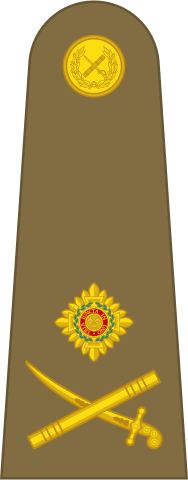
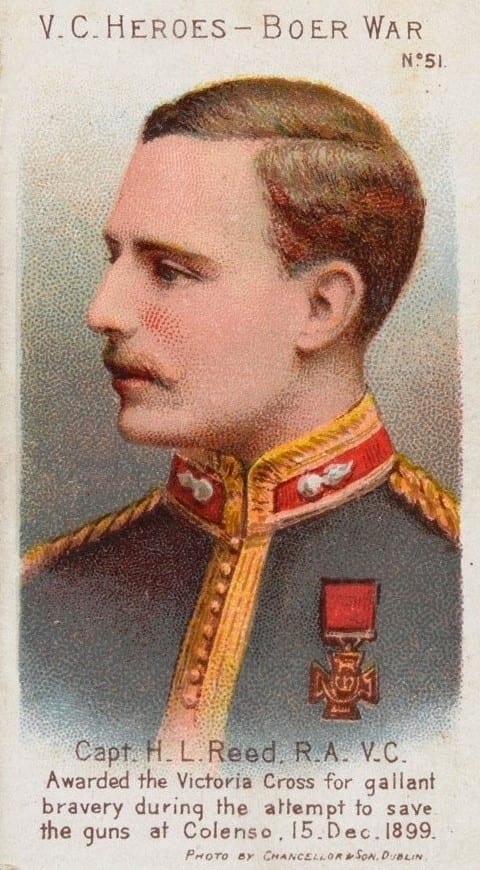
On 15 December 1899, amid the devastating gunfire at Colenso, Captain Hamilton Lyster Reed rode forward with three teams of artillery horses in an attempt to recover British guns stranded on the battlefield. He knew the danger, yet pressed ahead. Reed was wounded, five of the thirteen men accompanying him were also wounded, one man was killed, and thirteen of the twenty-one horses were lost. Although the attempt had to be abandoned, his extraordinary courage and determination earned him the Victoria Cross, Britain's highest award for gallantry. His citation was officially published in the London Gazette on 2 February 1900.
Major-General Hamilton Lyster Reed VC CB CMG was born in Dublin, Ireland, on 23 May 1869. He was the son of Sir Andrew Reed, Inspector-General of the Royal Irish Constabulary, and Elizabeth Mary Reed. Military distinction ran in his family: his uncle, Lieutenant-General Harry Hammon Lyster, was also a Victoria Cross recipient. Educated at the Royal Military Academy, Woolwich, Reed received his commission in the Royal Artillery on 13 February 1888 and became a captain in 1898.
During the Second Boer War of 1899 to 1902, Reed served with the 7th Battery, Royal Field Artillery, and subsequently held staff appointments, including service as an Adjutant and Deputy Assistant Adjutant-General in South Africa. He participated in operations in Natal, the relief of Ladysmith, Colenso, Spion Kop, Vaal Krantz, Tugela Heights, Pieter's Hill, Laing's Nek, Belfast and Lydenburg, as well as operations in the Orange River Colony. His service earned him three Mentions in Despatches, published in the London Gazette on 26 January 1900, 8 February 1901 and 10 September 1901. His South African campaign service was recognised by the Queen's South Africa Medal with six clasps and the King's South Africa Medal with two clasps.
After promotion to major in 1904, Reed attended the Staff College in 1905 and passed as a Staff College graduate. He subsequently served on the General Staff at Army Headquarters and as Staff Officer to the Inspector-General of Overseas Forces. During the Balkan Wars of 1912 to 1913, he served as an additional military attaché with the Turkish Army, gaining valuable experience in international military affairs.
The First World War brought Reed into a succession of important operational appointments. He served as General Staff Officer, Grade 1, with the 27th Division on the Western Front before becoming Brigadier-General, General Staff, IX Corps, with the Mediterranean Expeditionary Force at Gallipoli. He subsequently served as Brigadier-General, Royal Artillery, 40th Division, and Brigadier-General, Royal Artillery, X Corps. In October 1917, he became General Officer Commanding the 15th (Scottish) Division, a command he held through the final campaigns of the war and into 1919. Wounded during the conflict, he was repeatedly mentioned in despatches for distinguished service.
His First World War honours included appointment as a Companion of the Order of St Michael and St George on 10 April 1916 and a Companion of the Order of the Bath in the New Year honours of 1 January 1918. France appointed him a Commander of the Legion of Honour. The London Gazette of 21 July 1919 officially announced this distinction and granted British permission to wear it. His contemporary biographical record also identifies him as a recipient of the French Croix de Guerre. His attributed medal group additionally includes the King George V Coronation Medal of 1911, alongside the 1914–15 Star, British War Medal and Victory Medal.
Promoted to Major-General on 3 June 1919, Reed continued his military career after the Great War. In June 1923, he became General Officer Commanding the 52nd (Lowland) Division, serving in this peacetime command until 1927. He retired from the Army in June 1928.
Major-General Hamilton Lyster Reed died in South Kensington, London, on 7 March 1931, aged 61. Buried at East Sheen Cemetery, Richmond, Surrey, he left behind a remarkable record of courage, professional leadership and service across two major conflicts. From the exposed battlefield at Colenso to senior formation command during the First World War, Reed's life exemplifies the courage and dedication of a distinguished Royal Artillery officer and Victoria Cross recipient.
Become the named supporter for this profile and edit the tribute biography and portrait (Owner account required). Proceeds help keep the archive online.
$25 USD / year — annual sponsorship renewal. Keeps the page online and, where enabled, the family anniversary remembrance emails active.