Loading archive…
Loading archive…
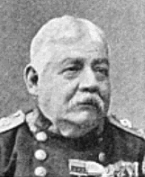
Henry James Raby was born in Boulogne, France, on 26 September 1827, while his parents, Arthur Turnour Raby—an ironmaster operating in Llanelli, Carmarthenshire—and Henrietta Jane Raby, were travelling abroad. He received his early schooling at Sherborne School in Dorset between 1841 and 1842. On 8 March 1842, he entered the Royal Navy as a First Class Volunteer aboard HMS Monarch. Over the following decade, Raby served in various billets afloat, gaining seamanship experience as a Midshipman and Mate aboard HMS Rodney, HMS Trafalgar, HMS Victory, HMS Ocean, and HMS Terrible. He received his promotion to Lieutenant on 15 January 1850.
In October 1850, Lieutenant Raby joined the crew of HMS Wasp, a screw sloop assigned to anti-slavery patrols off the West Coast of Africa. Following the escalation of political tensions with the Russian Empire, HMS Wasp redeployed to the Black Sea to support Ottoman positions along the Circassian coast. On 23 October 1854, Raby landed in the Crimea as part of the Royal Naval Brigade formed from the crews of HMS Wasp and HMS Diamond. For eleven months, he served continuously in the battery trenches during the siege of Sevastopol, enduring sustained artillery exchanges and harsh environmental conditions.
On 18 June 1855, during the allied assault on the Great Redan, Lieutenant Raby acted as second-in-command of a naval ladder party tasked with placing assault bridges across the ditch of the Russian fortress. The attack faced heavy canister and rifle fire, forcing the British infantry and naval detachments to retreat to their defensive works. Immediately following the repulse, a soldier belonging to the 57th (West Middlesex) Regiment of Foot was spotted lying wounded in open terrain roughly seventy yards ahead of the advanced sap near the salient angle of the Redan. The soldier had been shot through both legs and was unable to crawl back.
Lieutenant Raby, alongside Captain of the Forecastle John Taylor and Boatswain's Mate Henry Curtis, climbed over the breastwork. Moving across open ground under direct defensive fire, the three seamen reached the wounded soldier and carried him back behind the cover of the British trench line. Captain Stephen Lushington officially submitted their names for gallantry recognition.
The official citation appeared in The London Gazette on 24 February 1857:
"On the 18th June, 1855, immediately after the assault on Sebastopol, a soldier of the 57th Regiment, who had been shot through both legs, was observed sitting up, and calling for assistance. Climbing over the breastwork of the advanced sap, Commander Raby and two seamen proceeded upwards of seventy yards across the open space towards the salient angle of the Redan, and in spite of the heavy fire which was still continuing, succeeded in carrying the wounded soldier to a place of safety, at the imminent risk of their own lives."
Promoted to Commander on 20 September 1855 for his service in the siege trenches, Raby attended the inaugural Victoria Cross investiture at Hyde Park, London, on 26 June 1857. Queen Victoria decorated sixty-two personnel during the ceremony. Under military protocol, recipients stepped forward in order of service precedence and military rank. Because the Royal Navy takes precedence over the Army as the senior service, Commander Raby stood at the head of the naval contingent as its senior officer. Consequently, he became the first individual physically decorated with the medal by the Sovereign. During the presentation, the Queen accidentally pushed the pin through Raby's flesh, though he stood at attention without reaction until the presentation concluded.
Raby subsequently returned to West Africa, commanding HMS Medusa from 1856, HMS Weser from 1859, and HMS Alecto from 1860. On 23 April 1861, while directing a force of armed boats from the squadron during the attack and capture of Porto Novo, he received a combat wound while destroying slave-trading facilities. He also engaged in regional diplomacy, earning formal appreciation from the Foreign Office after negotiating a commercial and anti-slaving treaty with local rulers along the Old Calabar River.
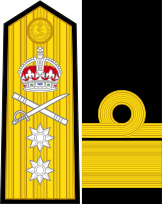
Following his advancement to Captain on 24 November 1862, Raby married Judith Forster, daughter of Colonel Thomas Burton Watkin Forster, on 31 December 1863 in Holt, Wiltshire. He later commanded HMS Adventure on the China Station from 1868 to 1871. Appointed a Companion of the Order of the Bath on 29 May 1875, Raby retired from the active list in 1877 and attained the rank of Rear-Admiral on the retired list on 21 March 1878. He spent his later years at 8 Clarence Parade in Southsea, contributing time to local institutions including the Royal Seamen and Marines' Orphanage and the Royal Sailors' Home. Rear-Admiral Raby died at his residence on 13 February 1907 at seventy-nine years of age and was buried in Highland Road Cemetery, Portsmouth.
Become the named supporter for this profile and edit the tribute biography and portrait (Owner account required). Proceeds help keep the archive online.
$25 USD / year — annual sponsorship renewal. Keeps the page online and, where enabled, the family anniversary remembrance emails active.