★
Loading archive…
Loading archive…

Captain, U.S. Army
Support & adopt this hero ↓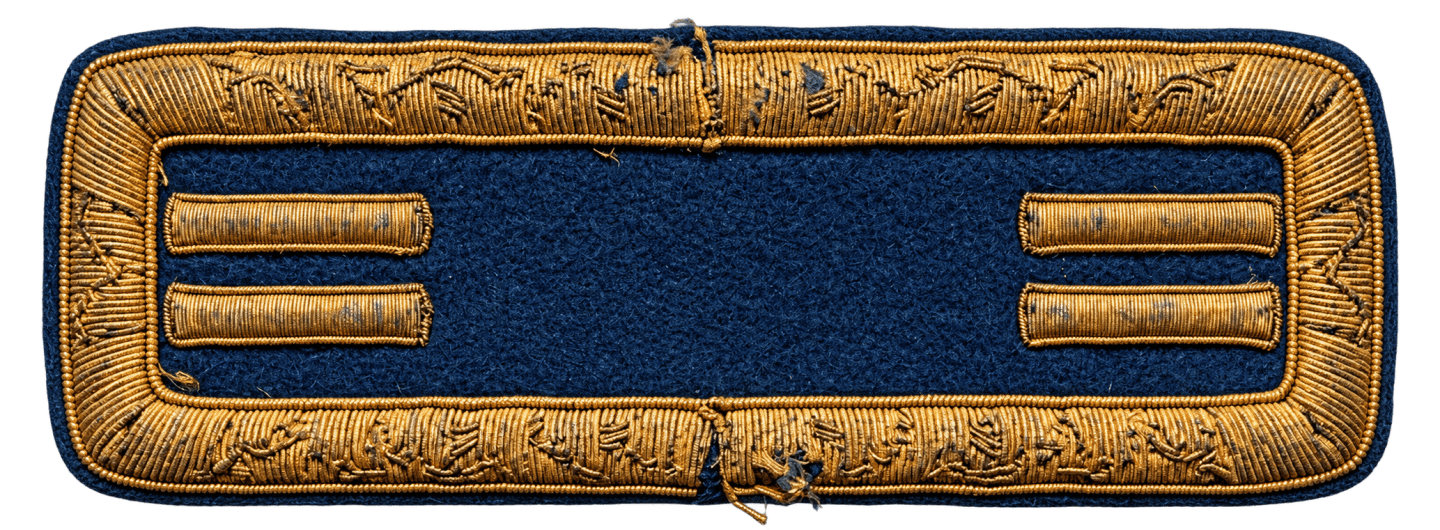
One Message Through Fire Saved His Own Regiment
Herbert E. Farnsworth was born on August 23, 1834, in Perrysburg, Cattaraugus County, New York. When the American Civil War transformed the country in 1861, he entered military service with the 10th New York Cavalry, a Union regiment also known as the Porter Guard. His wartime career would take him from the comparatively modest position of musician to the senior enlisted position of Sergeant Major and eventually into the commissioned officer ranks, culminating in promotion to Captain.
Farnsworth enlisted at Gowanda, New York, on September 17, 1861, and was mustered into Company D of the 10th New York Cavalry as a musician on September 23. Cavalry musicians and buglers performed an essential battlefield function during the Civil War because bugle calls transmitted commands across terrain where shouted orders could easily be lost in the noise and confusion of combat. Farnsworth was subsequently appointed Chief Bugler, marking the beginning of a steady rise through the regiment.
On November 1, 1862, Farnsworth was appointed Sergeant Major. This was a significant advancement. As the senior enlisted soldier at regimental level, a Sergeant Major carried substantial responsibility for discipline, administration, communication, and the execution of orders. By this point Farnsworth was no longer simply supporting the regiment through musical signals; he had become an important part of its command structure.
The 10th New York Cavalry served extensively with the Army of the Potomac. Its service included operations in Maryland and Virginia and participation in numerous cavalry campaigns. The regiment fought at places including Fredericksburg, Brandy Station, Middleburg, Gettysburg, Haw's Shop, Trevilian Station, and later in operations around Petersburg and the Shenandoah Valley. Its mounted soldiers were frequently used for reconnaissance, screening movements, raids, and direct combat against Confederate cavalry.
Farnsworth reenlisted on December 31, 1863, continuing his service as the war entered its increasingly violent final stages. During the spring of 1864, the 10th New York Cavalry participated in operations connected with the Overland Campaign. By June, Union cavalry under Major General Philip Sheridan was ordered on a major raid into central Virginia. One of Sheridan's objectives was to threaten and damage the Virginia Central Railroad while drawing Confederate cavalry away from other Union operations.
That movement produced the Battle of Trevilian Station on June 11 and 12, 1864. It became one of the largest and bloodiest cavalry engagements of the Civil War. Union cavalry encountered Confederate forces commanded principally by Major General Wade Hampton and Major General Fitzhugh Lee. Fighting developed across roads, woods, fields, and railroad approaches, and formations repeatedly became difficult to distinguish amid smoke, movement, and the confusion of mounted and dismounted combat.
For Sergeant Major Herbert E. Farnsworth, June 11 became the defining day of his military career. During the battle, a Union artillery battery began firing into Farnsworth's own regiment. The situation created an extraordinary danger: soldiers of the 10th New York Cavalry were already exposed to Confederate fire while simultaneously being endangered by artillery from their own side.
Someone had to reach the battery and stop the fire.
Farnsworth voluntarily undertook that mission. To deliver the necessary message, he crossed a ridge that was in plain view of the opposing forces. The ground was being swept by the fire of both armies. His task required him to expose himself deliberately to a battlefield where projectiles were coming from both Union and Confederate positions.
He successfully carried the message, and the Union battery stopped firing into his regiment.
Unlike many Medal of Honor actions involving the capture of a flag, the storming of a fortified position, or the rescue of wounded soldiers, Farnsworth's heroism centered on communication under extreme battlefield conditions. The military importance of his action was immediate. Every additional round fired by the Union battery risked striking friendly cavalrymen. Delivering the message required crossing exposed ground when remaining under cover would have been far safer.
Farnsworth survived Trevilian Station and continued serving with the 10th New York Cavalry. His career did not end with the act for which he would eventually receive the Medal of Honor. On August 1, 1864, he was mustered in as First Lieutenant of Company I, marking his transition from the enlisted ranks to commissioned leadership.
His advancement continued during the final months of the Civil War. In March 1865, as Union armies tightened their pressure on Confederate forces in Virginia, Farnsworth advanced again. He became Captain of Company B of the 10th New York Cavalry. Captain was the highest verified rank of his military career, an important distinction from the Sergeant Major rank he held when he performed his Medal of Honor action.
The difference between those two ranks is central to understanding his service. At Trevilian Station on June 11, 1864, Farnsworth was Sergeant Major. Later, through promotion and continued service, he became a Captain. His record therefore reflects a progression from musician to Chief Bugler, Sergeant Major, First Lieutenant, and finally Captain—an unusually substantial rise during a single wartime career.
The 10th New York Cavalry continued operating through the closing campaigns in Virginia. The regiment participated in the broader operations that eventually broke Confederate resistance around Petersburg and contributed to the final campaigns culminating in the surrender of Robert E. Lee's Army of Northern Virginia in April 1865. Farnsworth remained in military service until he was mustered out as a supernumerary on June 26, 1865, at Cloud's Mills, Virginia.
Decades passed before the United States formally recognized his action at Trevilian Station. On April 1, 1898, Herbert E. Farnsworth was presented with the Medal of Honor for his conduct on June 11, 1864. More than thirty-three years separated the battlefield action from the presentation of the decoration.
For the historical medal record used in this profile, his award is represented as the Medal of Honor 1896–1903 Army — 1898. The year reflects the date on which the award was presented, while the heroic action itself remains firmly associated with Trevilian Station in 1864. No additional clasp, bar, star, or other device has been verified for his Medal of Honor.
The Medal of Honor was the United States' principal military decoration for extraordinary conduct during the Civil War era. Farnsworth's award recognized a very specific act: voluntarily carrying the message that stopped a Union battery from firing into his own regiment while crossing an exposed ridge swept by the fire of both armies. The recognition therefore preserved not merely the fact that he had survived a dangerous battle, but the deliberate decision he made to expose himself in order to protect his fellow soldiers.
Farnsworth lived for more than four decades after the Civil War. He witnessed the country move far beyond the conflict in which he had served and lived long enough to receive the national recognition that had not come during the war itself. He died on July 4, 1908, in Clarkston, Washington, and was buried in Pomeroy City Cemetery in Washington.
Herbert E. Farnsworth's military legacy is defined by both advancement and courage. He entered the 10th New York Cavalry as a musician, became Chief Bugler, rose to Sergeant Major, earned a commission as First Lieutenant, and eventually reached the rank of Captain. Yet the moment for which he became nationally remembered occurred while he was still Sergeant Major, when friendly artillery threatened his regiment at Trevilian Station.
With both armies firing across the ground before him, Farnsworth carried one message across an exposed ridge. He reached the battery, stopped the deadly friendly fire, and returned from an action that would eventually earn him the Medal of Honor. That brief mission became the defining moment of a Civil War career that had begun with a bugle and ended with the rank of Captain.
Become the named supporter for this profile and edit the tribute biography and portrait (Owner account required). Proceeds help keep the archive online.
$25 USD / year — annual sponsorship renewal. Keeps the page online and, where enabled, the family anniversary remembrance emails active.