★
Loading archive…
Loading archive…

He took a fallen gunner’s place, and kept his gun in action.
Joel Holmes was born in the Halifax district of Yorkshire in 1821. He worked as a clothier before enlisting in the 84th Regiment of Foot at Halifax in June 1839. His long overseas service eventually brought him to the Indian uprising of 1857.
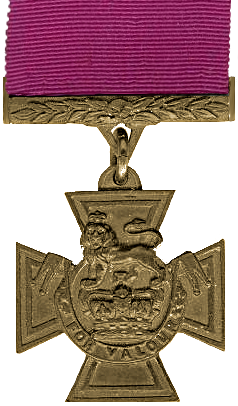
On 25 September 1857, during the advance to relieve Lucknow, British troops attempted to cross the Char Bagh Bridge under intense enemy fire. Captain Francis Maude's artillery suffered heavy losses as it engaged enemy guns covering the crossing. Holmes volunteered to take the place of a gunner who had been struck down. He remained at the gun under fire, helping the artillery continue its work until the piece was limbered up. His conduct was recommended by Captain Frederick Willis and earned the Victoria Cross.
Queen Victoria presented Holmes's medal at Southsea Common, Portsmouth, on 2 August 1858. He continued serving until November 1860, leaving at his own request after more than twenty-one years in the Army, including over fifteen years in the East Indies. He returned to Yorkshire and lived in Halifax. He died there on 27 July 1872 and was buried in All Souls' Cemetery. His medals subsequently became part of the York and Lancaster Regimental Museum collection.
Official Victoria Cross citation
For distinguished conduct in volunteering to assist in working a gun of Captain Maude’s Battery, under a heavy fire, from which gun nearly all the Artillerymen had been shot away. (Extract from Field Force Orders of the late Major-General Havelock, dated 17th October, 1857.)
Become the named supporter for this profile and edit the tribute biography and portrait (Owner account required). Proceeds help keep the archive online.
$25 USD / year — annual sponsorship renewal. Keeps the page online and, where enabled, the family anniversary remembrance emails active.