★
Loading archive…
Loading archive…
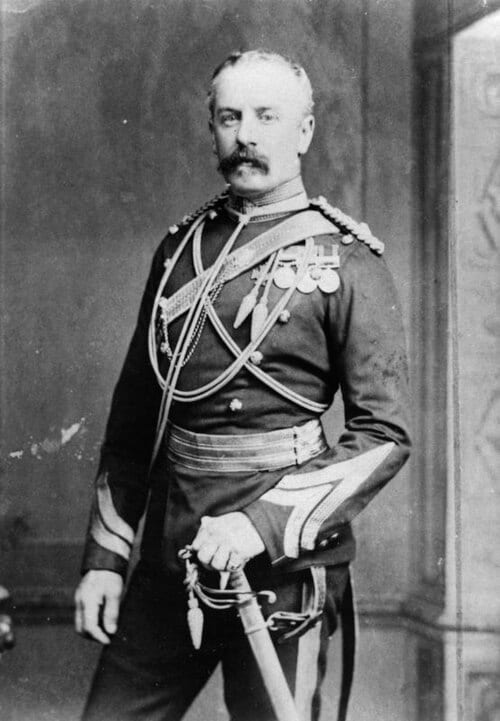
Colonel, British Army
Support & adopt this hero ↓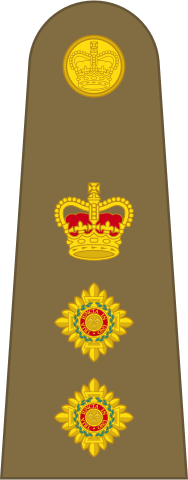
A wounded soldier lay trapped beneath his fallen horse as Zulu warriors closed in. The British cavalry patrol was retreating under heavy fire, and stopping could cost a man his life. Yet Captain Lord William Beresford turned back. Riding into danger, he helped rescue the stranded soldier and brought him to safety. That extraordinary act of courage on 3 July 1879 earned him the Victoria Cross and secured his place among the celebrated heroes of the Anglo-Zulu War.
Lord William Leslie de la Poer Beresford was born on 20 July 1847 at Mullaghbrack, County Armagh, Ireland. He was the third son of John de la Poer Beresford, the 4th Marquess of Waterford, and Christiana Leslie. Educated at Eton College and later in Bonn, Germany, where he studied French and German, Beresford grew up with a strong interest in horses, riding and military life. In June 1867, he entered the British Army as a Cornet in the 9th (The Queen's Royal) Lancers, beginning a military career that would take him across several important campaigns of the British Empire.
Beresford was posted to India in 1875, where he became associated with the staff of successive Viceroys. His early military experience included the Jowaki Expedition of 1877–1878, during which British forces conducted operations against Afridi tribal resistance along the North-West Frontier. He subsequently served during the Second Anglo-Afghan War, including operations connected with the capture of Ali Musjid. These campaigns established his reputation as an energetic cavalry officer who combined regimental service with important responsibilities on the viceregal staff.
His defining moment came during the Anglo-Zulu War of 1879. On 3 July, a mounted reconnaissance party was retiring across the White Umvolosi River near Ulundi when Sergeant Fitzmaurice of the 24th Regiment was thrown down and injured after his horse fell upon him. With Zulu warriors advancing in considerable numbers and firing upon the retreating British, Fitzmaurice was in grave danger. Beresford immediately turned back and attempted to bring the wounded sergeant to safety. Sergeant Edmund O'Toole of the Frontier Light Horse assisted him in the rescue. Together, the two men managed to place Fitzmaurice behind Beresford on his horse and escape across the river under enemy fire. Beresford's Victoria Cross recognised his extraordinary courage, but his conduct also revealed his sense of honour and comradeship. He insisted that O'Toole, who had shared the danger, should receive recognition for his part in the rescue. O'Toole was subsequently awarded the Victoria Cross as well. Beresford received his decoration from Queen Victoria on 24 August 1879.
Following the Zulu campaign, Beresford returned to India and increasingly devoted himself to administrative and military staff responsibilities. In 1881, he became Military Secretary to the Viceroy of India, serving successively under Lord Ripon, Lord Dufferin and Lord Lansdowne. His responsibilities extended beyond routine military administration, involving the coordination of military affairs at the highest levels of British government in India. He was also associated with the Burma operations, including the expedition of 1886 and the subsequent campaigns. His service and professional contributions earned further recognition, and he was promoted to Colonel in 1891.
Beresford's achievements were not confined to the battlefield or the military establishment. He became one of the most prominent sporting personalities in British India, particularly through his involvement in polo, horse racing and steeplechasing. His racing stable enjoyed considerable success, and his horses won the prestigious Viceroy's Cup on six occasions. His enthusiasm for sport, colourful personality and extensive social connections made him a widely recognised figure in Anglo-Indian society.
His distinguished service was further recognised in 1886 when he was appointed a Companion of the Order of the Indian Empire. In January 1894, he was promoted to Knight Commander of the Order of the Indian Empire, receiving the post-nominal letters KCIE. After nearly two decades in India, he returned to Britain in 1894. On 30 April 1895, he married Lilian Warren, the widow of the 8th Duke of Marlborough. They had a son, William, born in 1897.
Colonel Lord William Beresford died at Deepdene, Dorking, Surrey, on 28 December 1900, aged 53. He was buried at Clonegam Churchyard in County Waterford, Ireland.
Remembered as a Victoria Cross recipient of the 9th Lancers, Beresford represented a distinctive combination of battlefield courage, military professionalism and public achievement. His rescue of Sergeant Fitzmaurice during the Anglo-Zulu War remains the defining act of his military career, while his long service as Military Secretary to the Viceroys of India demonstrates the wider contribution he made to the British Army. His story is ultimately one of courage under fire, loyalty to a fellow soldier and a lifetime of service that extended far beyond the moment that earned him the Victoria Cross.
Become the named supporter for this profile and edit the tribute biography and portrait (Owner account required). Proceeds help keep the archive online.
$25 USD / year — annual sponsorship renewal. Keeps the page online and, where enabled, the family anniversary remembrance emails active.