★
Loading archive…
Loading archive…

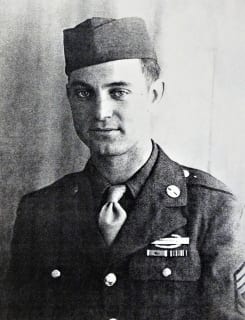
He held a shattered house while five other soldiers escaped.
Morris Eugene Crain was born at Bandana, Kentucky, on 7 October 1924, one of eleven children of Dean and Lillian Crain. He joined the United States Army during the Second World War and married Charliene McTaggert during a training furlough. Their daughter, Morris Fay, was born while he was overseas.
He served with Company E, 141st Infantry Regiment, 36th Infantry Division. His campaigning took him through Italy and southern France. He was wounded during the fighting near Montelimar and again in the Vosges, returning to duty after treatment. He became a technical sergeant and led a platoon.
On 13 March 1945, at Haguenau, his men advanced to enlarge the bridgehead across the Moder River. He led them against enemy positions, killing and capturing defenders and securing an important road junction. Throughout the day he moved between positions under artillery and small-arms fire, carrying ammunition, maintaining communications and encouraging the soldiers.
At nightfall, tanks and infantry renewed the German attack. As the Americans fell back between damaged houses, Crain crossed the fire to a building held by five of his men. A tank was firing into the house, and German soldiers were attacking from an adjoining room. He ordered the men out and remained with his submachine gun to cover their withdrawal.
He continued firing until enemy shelling destroyed the building and killed him. His resistance helped the platoon establish another defence and retain the bridgehead. The Medal of Honor was awarded posthumously in February 1946. His remains were returned to Kentucky and buried at Mount Pleasant Cemetery near La Center. He was twenty when he died.
Become the named supporter for this profile and edit the tribute biography and portrait (Owner account required). Proceeds help keep the archive online.
$25 USD / year — annual sponsorship renewal. Keeps the page online and, where enabled, the family anniversary remembrance emails active.