★
Loading archive…
Loading archive…

He Volunteered for Vicksburg's Forlorn Hope
Nicholas Geschwind was a French-born Union Army officer whose extraordinary courage during one of the most dangerous assaults of the American Civil War earned him the Medal of Honor, the United States' highest military decoration for valor. On May 22, 1863, during the Siege of Vicksburg, Mississippi, Geschwind participated in a volunteer storming party that advanced against heavily fortified Confederate defenses under devastating enemy fire. The dangerous operation, remembered as the Forlorn Hope, became one of the most remarkable episodes of the Vicksburg Campaign. More than thirty-one years later, his bravery received national recognition, securing his place among the distinguished soldiers of the Union Army.
Born around 1829 in France, Nicholas Geschwind spent his early years in Europe before eventually making his home in the United States. His exact birth date, family background, education, and immigration history remain poorly documented. By the outbreak of the American Civil War, however, he had established a connection with Illinois, where he would enter military service and become associated with the Union Army.
When the Civil War began in April 1861, the United States entered a conflict that would determine the survival of the Union and the future of slavery in America. As the fighting expanded, President Abraham Lincoln called for additional volunteers to strengthen the Federal armies. Illinois responded by organizing new infantry regiments to serve in campaigns across the western theater.
Geschwind entered Union military service and became an officer in Company F of the 116th Illinois Volunteer Infantry. His Medal of Honor records identify Pleasant Hill, Illinois, as his place of entry into service. The 116th Illinois was organized at Decatur and formally mustered into federal service on September 30, 1862. Under Colonel Nathan W. Tupper, the regiment joined the growing Union forces preparing to campaign along the Mississippi River.
Company F was recruited primarily from McLean County, while most of the regiment's other companies came from Macon County. Geschwind's military records document his advancement through the officer ranks, including service as a first lieutenant and captain. The surviving roster contains differences between his dates of rank and formal muster, but it confirms that he ultimately completed his military career as a captain. Official Medal of Honor records also identify him by that rank.
In November 1862, the 116th Illinois departed Illinois for Memphis, Tennessee, where it joined Union forces operating under Major General William T. Sherman. The regiment became part of the Army of the Tennessee and participated in operations intended to secure the Mississippi River and weaken Confederate resistance in the western theater.
During the closing weeks of 1862, the regiment took part in the campaign against Confederate positions near Chickasaw Bayou, Mississippi. The fighting exposed its soldiers to the difficulties of attacking entrenched defenders across swampy terrain. In January 1863, the regiment also participated in the Union assault on Fort Hindman at Arkansas Post, Arkansas, an operation that resulted in the capture of an important Confederate stronghold.
Following these engagements, the 116th Illinois returned to the Mississippi River region and assisted with operations near Young's Point, Louisiana, opposite Vicksburg. The regiment's history describes severe sickness during this period, with more than one hundred members lost to disease. The hardships of campaigning along the river demonstrated that military service involved dangers extending far beyond the battlefield.
By the spring of 1863, Union forces under Major General Ulysses S. Grant were advancing toward Vicksburg, one of the Confederacy's most strategically important strongholds. The city occupied high ground overlooking the Mississippi River and controlled a critical section of the waterway. Its capture would allow the Union to restore navigation along the river and divide the Confederacy geographically.
Following victories at Champion Hill and the Big Black River Bridge, Grant's forces approached the Confederate defenses surrounding Vicksburg. Confederate Lieutenant General John C. Pemberton withdrew his army into the city's fortified positions, where soldiers prepared to resist the advancing Union troops.
On May 19, 1863, Grant ordered an initial assault against the Confederate fortifications. The attack failed to break through the defensive line, and Union troops suffered heavy casualties. Despite the setback, Grant believed another coordinated offensive might succeed before the Confederates could strengthen their positions further.
A second major assault was scheduled for May 22. One of the principal targets was the Stockade Redan, a powerful Confederate fortification protecting the Graveyard Road approach to Vicksburg. The position was defended by artillery, infantry, steep earthworks, and a deep ditch that made a direct attack exceptionally dangerous.
To overcome these obstacles, Union commanders organized a volunteer storming party of approximately 150 soldiers. Their assignment was to advance ahead of the main attacking force, carry wooden planks to bridge the defensive ditch, and deliver scaling ladders that would allow the infantry to climb the Confederate earthworks.
The mission carried extraordinary risks. The volunteers would be among the first soldiers exposed to Confederate fire, advancing across ground covered by enemy weapons while carrying equipment necessary for the assault. Because of the danger, the detachment became known as the Forlorn Hope, a military term historically associated with soldiers assigned to lead particularly hazardous attacks.
Nicholas Geschwind was among the volunteers who participated in this operation. Serving with the 116th Illinois Infantry, he joined the force that advanced toward the Confederate defenses on the morning of May 22, 1863. His decision to participate placed him directly in one of the most dangerous assignments of the Vicksburg Campaign.
At approximately ten o'clock in the morning, following an artillery bombardment, the volunteer storming party advanced along Graveyard Road toward the Stockade Redan. The soldiers moved toward the Confederate position carrying the equipment intended to help the following infantry cross the defensive obstacles.
Confederate defenders initially withheld their fire as the Union volunteers approached. When the attackers reached close range, the defenders unleashed devastating musket fire. Soldiers were killed or wounded as the advance continued, and the survivors struggled to reach the ditch and the outer slope of the fortification.
Despite the intense resistance, members of the storming party reached the Confederate works, and Union flags were placed on the exterior slope of the redan. The defenders maintained their positions, however, and the assaulting force found itself exposed to continuing fire.
The main Union attack was unable to overcome the Confederate defenses. Many volunteers remained pinned down near the fortifications, unable to advance or withdraw safely. The attempt to storm the Stockade Redan ultimately failed, and the surviving soldiers withdrew under the protection of darkness.
Geschwind's official Medal of Honor citation recognized his gallantry during the charge of the volunteer storming party. Although the citation does not describe his individual movements or identify the equipment he personally carried, it establishes his participation in the hazardous assault and the exceptional bravery attributed to his conduct.
The failed attacks of May 19 and May 22 convinced Grant to abandon further immediate attempts to capture Vicksburg through frontal assaults. Instead, Union forces began a systematic siege, surrounding the city and gradually reducing Confederate supplies while maintaining pressure on the defensive positions.
On July 4, 1863, after weeks of bombardment, isolation, and dwindling provisions, the Confederate garrison surrendered Vicksburg to Grant. The victory gave the Union control of a critical section of the Mississippi River and represented a decisive turning point in the western theater.
Following the Vicksburg Campaign, the 116th Illinois continued serving with the Army of the Tennessee. Its documented operations included the Chattanooga Campaign of 1863, the Atlanta Campaign of 1864, Sherman's March to the Sea, and the Campaign of the Carolinas in 1865. These campaigns carried the regiment across several Confederate states during the final years of the war.
The regiment's extensive service history reflects its contribution to the Union war effort, although surviving records do not independently establish Geschwind's personal involvement in every engagement undertaken by the unit.
By the spring of 1865, Confederate resistance was collapsing across the South. The 116th Illinois eventually joined other Union troops returning from the final campaigns and participated in the military activities accompanying the conclusion of the war.
On June 7, 1865, Nicholas Geschwind was mustered out of military service as a captain. His name also appeared in the regimental records in connection with an appointment as major, but that appointment was not formally mustered. Consequently, captain remained his highest confirmed active military rank.
More than three decades after the assault at Vicksburg, Geschwind received formal recognition for his courage. On August 24, 1894, he was awarded the Medal of Honor for his participation in the volunteer storming party on May 22, 1863.
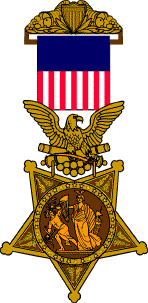
The Medal of Honor had been established during the Civil War to recognize exceptional military conduct. Congress authorized the Army decoration in 1862, creating a national means of honoring soldiers whose actions demonstrated extraordinary bravery. Geschwind's award acknowledged a moment when he voluntarily participated in an assault against a heavily defended Confederate position despite the extraordinary danger.
His recognition also connected him with other members of the Forlorn Hope who received the Medal of Honor for their actions at Vicksburg. The awards preserved the memory of soldiers who accepted one of the campaign's most hazardous assignments during an unsuccessful but historically significant attack.
The surviving historical record provides limited information about Geschwind's civilian life after his military discharge. Details concerning his occupation, family relationships, and activities during the decades following the war remain insufficiently documented. Nevertheless, his Medal of Honor recognition in 1894 ensured that his contribution to the Vicksburg Campaign would remain part of the nation's military history.
Nicholas Geschwind died on January 2, 1897, at approximately sixty-seven years of age. He was buried in Springdale Cemetery in Peoria, Illinois, where his grave preserves the memory of his distinguished military service.
Geschwind's enduring legacy rests upon his courage during the assault on the Stockade Redan on May 22, 1863. As a member of the volunteer storming party, he accepted the dangers of advancing ahead of the main Union force against one of Vicksburg's strongest defensive positions.
From his origins in France to his service as an officer in the Union Army, Nicholas Geschwind's life became part of the history of the American Civil War. His participation in the Forlorn Hope and subsequent Medal of Honor recognition remain lasting examples of the courage demonstrated by soldiers who undertook extraordinary risks during the struggle for Vicksburg.
Become the named supporter for this profile and edit the tribute biography and portrait (Owner account required). Proceeds help keep the archive online.
$25 USD / year — annual sponsorship renewal. Keeps the page online and, where enabled, the family anniversary remembrance emails active.