★
Loading archive…
Loading archive…

The Cavalryman Who Captured a Flag and Its Bearer
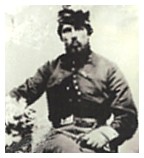
Norman Francis Bates was an American Civil War soldier whose extraordinary courage during the Battle of Columbus, Georgia, earned him the Medal of Honor, the United States' highest military decoration for valor. On April 16, 1865, while serving as a sergeant in Company E of the 4th Iowa Volunteer Cavalry, Bates captured a Confederate battle flag and its bearer during a Union assault. His achievement came during one of the final major engagements of the Civil War, when Union cavalry forces advanced into Georgia as Confederate resistance was collapsing across the South.
Born on November 6, 1839, in Vermont, Norman Francis Bates later moved west to Iowa. Historical sources differ on the exact town of his birth, but his military records establish his Vermont origins and his residence in Malcom, Poweshiek County, Iowa, before his enlistment.
When the American Civil War began in April 1861, Iowa quickly began organizing volunteer regiments to support the Union. As the conflict expanded, the state recruited cavalrymen for operations requiring mobility, reconnaissance, and the ability to move rapidly across difficult territory.
On September 16, 1861, Bates enlisted in the Union Army. He was formally mustered into Company E of the 4th Iowa Volunteer Cavalry on November 23, 1861, entering military service as a private.
The 4th Iowa Cavalry was organized at Camp Harlan near Mount Pleasant, Iowa. Its original commander was Colonel Asbury B. Porter, and its companies included volunteers from several Iowa counties. The regiment prepared for mounted service before receiving orders to join Union military operations west of the Mississippi River.
During 1862, the regiment served in Missouri and Arkansas, where Union forces attempted to secure important transportation routes, maintain control of contested territory, and confront Confederate troops operating across the region.
The regiment subsequently participated in campaigns associated with the Union advance down the Mississippi River. Its documented service included operations around Vicksburg, Mississippi, during the campaign that eventually secured Union control of the river.
Bates remained with Company E as his military career progressed. On October 19, 1862, he was promoted to eighth corporal. Further advancements followed, including promotion to sixth corporal on November 1, 1862, and fifth corporal on March 21, 1863.
These appointments reflected his progression through the regiment's enlisted ranks. His later military records also indicate that he returned to private rank at an unspecified point, although the date and circumstances of that reduction have not been established.
On December 14, 1863, Bates reenlisted as a veteran volunteer, extending his military service beyond his original enlistment. By this time, the 4th Iowa Cavalry had become an experienced mounted regiment that had participated in several demanding campaigns.
During 1864, the regiment continued operating in the western theater. Its military history included engagements in Mississippi and operations against Confederate cavalry forces in Missouri and Kansas.
On December 5, 1864, Bates was promoted to sixth sergeant, confirming his advancement into the regiment's noncommissioned officer ranks. This was the rank he held during the action for which he would receive the Medal of Honor.
In early 1865, the 4th Iowa Cavalry became part of a large Union mounted force assembled under Major General James H. Wilson. Wilson's command was preparing an extensive cavalry expedition into Alabama and Georgia, intended to destroy Confederate military facilities, disrupt transportation networks, and weaken the remaining Southern war effort.
The expedition became known as Wilson's Raid. Beginning in March 1865, thousands of Union cavalrymen advanced rapidly through Alabama, confronting Confederate troops while moving toward important military and industrial centers.
The 4th Iowa Cavalry served in a brigade commanded by Edward F. Winslow, alongside the 3rd Iowa and 10th Missouri Cavalry. These experienced regiments formed part of Wilson's mobile striking force.
On April 2, 1865, Union cavalry captured Selma, Alabama, after overcoming Confederate defenses. The city contained important military manufacturing and supply facilities, making its capture a significant achievement for the Union campaign.
Following the victory at Selma, Wilson's command continued eastward. Union forces occupied Montgomery, Alabama, before advancing toward Columbus, Georgia, an important industrial center situated along the Chattahoochee River.
Columbus contained military workshops, transportation facilities, and manufacturing operations that supported the Confederate war effort. Its location on the eastern bank of the Chattahoochee made the bridges connecting it with Alabama strategically important.
On April 16, 1865, Wilson's cavalry approached Columbus. Although General Robert E. Lee had surrendered his Army of Northern Virginia one week earlier, Confederate forces elsewhere continued resisting the Union advance.
The Confederate defenders of Columbus occupied positions around the river crossings and prepared to prevent Federal troops from entering the city.
During the afternoon, Union troops attempted to cross the lower bridge but encountered obstacles and Confederate resistance. The failed attempt forced Union commanders to reconsider their approach.
As evening approached, Wilson prepared an assault against the northern bridge. Winslow's brigade, including the 4th Iowa Cavalry, received an important role in the operation.
The attack began after darkness fell. Union cavalrymen advanced against Confederate defenses near the bridge, encountering rifle and artillery fire as they attempted to break through the Southern positions.
The fighting became confused and intense. Confederate defenders struggled to hold their positions while Union cavalry pushed forward, seeking to seize the crossing before it could be destroyed.
During the engagement, Sergeant Norman Francis Bates performed the action that would permanently distinguish his military career.
Bates captured a Confederate battle flag together with the soldier carrying it.
His official Medal of Honor citation records the achievement in exceptionally concise terms, recognizing the capture of both the enemy colors and their bearer.
Although the surviving citation does not identify the Confederate unit to which the flag belonged or describe the precise circumstances of the encounter, it establishes that Bates personally accomplished an important battlefield capture during the fighting at Columbus.
Regimental flags held considerable military and symbolic importance during the Civil War. They identified units on the battlefield, served as rallying points for soldiers, and represented the collective honor of the men who fought beneath them.
Capturing an enemy flag was therefore considered an act of particular distinction. Securing both the colors and the soldier carrying them demonstrated that Bates had overcome the immediate resistance associated with the flag's defense.
His achievement occurred during a night attack in which Union cavalrymen faced the additional difficulties of limited visibility, unfamiliar terrain, and close-range fighting.
The Union assault ultimately succeeded. Federal troops seized the bridge and entered Columbus, forcing Confederate defenders to abandon their positions.
By the following morning, Columbus had fallen into Union hands. Wilson's troops subsequently destroyed important Confederate military and industrial facilities, further reducing the South's ability to continue organized resistance.
The Battle of Columbus has often been described as one of the last major engagements of the American Civil War. For Bates, it became the defining event of nearly four years of military service.
Several other soldiers of the 4th Iowa Cavalry also received the Medal of Honor for their actions during the Georgia campaign. Their achievements reflected the regiment's distinguished participation in the final operations of Wilson's Raid.
On June 11, 1865, Bates advanced to fifth sergeant in Company E. Six days later, on June 17, 1865, he was awarded the Medal of Honor for capturing a Confederate battle flag and its bearer at Columbus on April 16.
The Medal of Honor had been established during the Civil War to recognize exceptional military conduct. Congress authorized the Army decoration in 1862, providing national recognition for soldiers whose courage distinguished them during military operations.
Bates received the original Civil War-era Army Medal of Honor. His decoration formally recognized his achievement during the final stages of the conflict and preserved the memory of his actions at Columbus.
After the fighting ended, the 4th Iowa Cavalry remained in federal service while Union authorities completed their military and administrative responsibilities in the South.
On August 8, 1865, Bates was mustered out with Company E at Atlanta, Georgia. His discharge concluded a military career that had begun in Iowa in September 1861 and continued through the end of the Civil War.
His documented service included advancement through the enlisted ranks, veteran reenlistment, and participation in a cavalry regiment that operated across several states during the conflict.
Following his return to civilian life, Bates settled in Poweshiek County, Iowa, where historical accounts identify farming and livestock raising as his principal occupations.
His postwar life was therefore closely associated with the agricultural communities of central Iowa, where he had lived before entering military service.
Later in life, Bates relocated to Southern California. The surviving sources provide limited details about the circumstances of his move, but they establish that he spent his final years in the Los Angeles area.
Norman Francis Bates died on October 16, 1915, in Los Angeles, California, at the age of seventy-five. He was buried at Forest Lawn Memorial Park in Glendale, California.
His death came more than fifty years after the Battle of Columbus, the engagement that had brought him national recognition.
Bates's legacy rests upon his service with the 4th Iowa Volunteer Cavalry and the courage he demonstrated during the Union assault on Columbus. His capture of a Confederate flag and its bearer earned him the Medal of Honor and secured his place among the distinguished cavalrymen of the American Civil War.
From his beginnings in Vermont to his military service in Iowa's cavalry and his later civilian life in Iowa and California, Norman Francis Bates lived through a transformative period in American history.
His actions on April 16, 1865, remain the defining achievement of his military career, commemorating the courage and determination he demonstrated during one of the final major battles of the Civil War.
Become the named supporter for this profile and edit the tribute biography and portrait (Owner account required). Proceeds help keep the archive online.
$25 USD / year — annual sponsorship renewal. Keeps the page online and, where enabled, the family anniversary remembrance emails active.