★
Loading archive…
Loading archive…
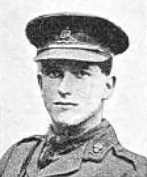
He kept his guns firing while surrounded and losing his men.
Samuel Thomas Dickson Wallace was born near Thornhill, Dumfriesshire, on 7 March 1892. He studied agriculture at Edinburgh University and trained with its Officers’ Training Corps. Commissioned into the Royal Field Artillery in October 1914, he went to France in 1915.
On 30 November 1917 at Gonnelieu during the Battle of Cambrai, his battery suffered heavy casualties and was almost surrounded. Lieutenant Wallace continued directing fire with only a handful of men. He helped work the guns for hours, engaging targets on changing fronts. When support arrived, he organised the removal of wounded men and essential gun parts. The guns were subsequently recovered. His leadership earned the Victoria Cross, presented by King George V in July 1918.
After the war he worked in agricultural administration in India, married Margaret Edenborough and raised a daughter. He returned to Scotland in the early 1930s. During the Second World War he served in the Royal Air Force Volunteer Reserve and RAF Regiment, reaching flight lieutenant before invaliding in 1943. He later worked for the Ministry of Agriculture in Lincolnshire and retired to Moffat. He died on 2 February 1968 and was buried there.
Victoria Cross citation Supplement to The London Gazette of 12 February 1918. 13 February 1918, Numb. 30523, p. 2004
For most conspicuous bravery and devoted services in action in command of a section. When the personnel of the battery was reduced to five by the fire of the artillery, machine guns, infantry, and aeroplanes; had lost its commander and five of the serjeants, and was surrounded by enemy infantry on the front right flank, and finally in rear, he maintained the fire of the guns by swinging the trails round close together, the men running and loading from gun to gun. He thereby not only covered other battery positions but also materially assisted some small infantry detachments to maintain a position against great odds. He was in action for eight hours, firing the whole time, and inflicting serious casualties on the enemy. Then, owing to the exhausted state of his personnel, he withdrew when infantry support arrived, taking with him the essential gun parts and all wounded men. His guns were eventually recovered.
Become the named supporter for this profile and edit the tribute biography and portrait (Owner account required). Proceeds help keep the archive online.
$25 USD / year — annual sponsorship renewal. Keeps the page online and, where enabled, the family anniversary remembrance emails active.