★
Loading archive…
Loading archive…
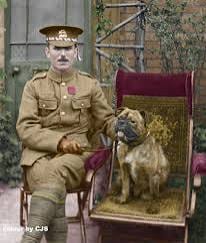
Private (or equivalent), British Army
Support & adopt this hero ↓
Through dangerous surf, five men saved seventeen fellow men.
Born in Roscommon, Ireland, in 1841, William Griffiths worked as a collier before enlisting in the British Army's 24th Regiment of Foot at Warwick on 11 April 1859. He subsequently served in Mauritius and Burma, eventually joining the 2nd Battalion's expedition to the Andaman Islands.
On 7 May 1867, a British shore party became stranded on Little Andaman Island in the Bay of Bengal. Dangerous surf made rescue extraordinarily difficult. Under Assistant-Surgeon Campbell Millis Douglas, Private Griffiths and fellow soldiers Thomas Murphy, James Cooper and David Bell repeatedly rowed a small boat through the breaking waves.
Their first approach failed when the boat began filling with water. Refusing to abandon the stranded men, the rescuers returned, bringing five soldiers to safety before making another journey. Their determination ultimately saved seventeen officers and men.
For this extraordinary act of courage, all five rescuers were awarded the Victoria Cross. Their actions were officially announced in The London Gazette on 17 December 1867 (issue 23333, page 6878). Griffiths received his decoration at Rangoon on 16 April 1868.
His military career continued long after the celebrated rescue. Griffiths served in southern Africa with the 2nd Battalion, 24th Regiment, including G Company during the Anglo-Zulu War. On 22 January 1879, he was killed in action during the Battle of Isandlwana, where British troops were overwhelmed by the Zulu army.
Griffiths was buried in an unmarked collective grave on the battlefield. His precise resting place remains unknown. His Victoria Cross is preserved at the Royal Welsh Museum in Brecon.
Official Victoria Cross citation
For the very gallant and daring manner in which, on the 7th of May, 1867, they risked their lives in manning a boat and proceeding through a dangerous surf to the rescue of some of their comrades, who formed part of an expedition which had been sent to the Island of Little Andaman, by order of the Chief Commissioner of British Burmah, with the view of ascertaining the fate of the Commander and seven of the crew of the ship ‘Assam Valley,’ who had landed there, and were supposed to have been murdered by the natives.
The officer who commanded the troops on the occasion reports: ‘About an hour later in the day, Dr. Douglas, 2nd Battalion, 24th Regiment, and the four Privates referred to, gallantly manning the second gig, made their way through the surf almost to the shore, but finding their boat was half filled with water, they retired. A second attempt made by Dr. Douglas and party proved successful, five of us being safely passed through the surf to the boats outside.
A third and last trip got the whole of the party left on shore safe to the boats.
It is stated that Dr. Douglas accomplished these trips through the surf to the shore by no ordinary exertion. He stood in the bows of the boat, and worked her in an intrepid and seamanlike manner, cool to a degree, as if what he was then doing was an ordinary act of every-day life. The four Privates behaved in an equally cool and collected manner, rowing through the roughest surf when the slightest hesitation or want of pluck on the part of any one of them would have been attended by the gravest results.
It is reported that seventeen officers and men were thus saved from what must otherwise have been a fearful risk, if not certainty of death.’
Become the named supporter for this profile and edit the tribute biography and portrait (Owner account required). Proceeds help keep the archive online.
$25 USD / year — annual sponsorship renewal. Keeps the page online and, where enabled, the family anniversary remembrance emails active.