★
Loading archive…
Loading archive…

General, British Army
Support & adopt this hero ↓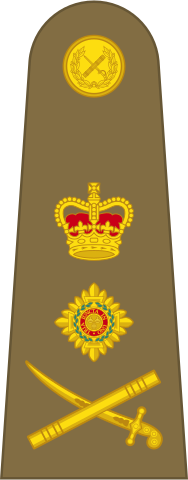
At Colenso, South Africa, Captain Walter Norris Congreve faced a deadly choice. British artillery guns lay abandoned under intense enemy fire, wounded soldiers were stranded in the open, and every attempt at rescue risked death. Already wounded himself, Congreve returned to the battlefield to save a fellow officer. His extraordinary courage earned him the Victoria Cross and launched a distinguished military career spanning two major wars, senior British Army commands and the governorship of Malta.
Born on 20 November 1862 at Chatham, Kent, Walter Norris Congreve was educated at Twyford School and Harrow before attending Pembroke College, Oxford. He entered the British Army through the Royal Military College, Sandhurst, and was commissioned into the Rifle Brigade on 7 February 1885. Following service in India and Britain, he deployed to South Africa during the Second Boer War of 1899-1902.
His defining act of bravery occurred at the Battle of Colenso on 15 December 1899. When the crews of the 14th and 66th Batteries, Royal Field Artillery, were killed, wounded or forced away from their guns, Congreve helped bring a team of horses to a limber and assisted in recovering an abandoned gun across ground swept by rifle and shell fire. Despite suffering wounds to his leg, he returned to rescue Lieutenant Frederick Roberts, who had fallen badly wounded. Congreve himself was struck several times, and his horse was shot in three places. His Victoria Cross citation was published in the London Gazette on 2 February 1900. His South African service also brought him the Queen's South Africa Medal with seven clasps, the King's South Africa Medal with two clasps and recognition in despatches.
Following the Boer War, Congreve served as Assistant Military Secretary and private secretary to Lord Kitchener in South Africa. He subsequently became Assistant Military Secretary and Aide-de-Camp to the Duke of Connaught, receiving appointment as a Member of the Fourth Class of the Royal Victorian Order in 1903. His distinguished service was further recognised through the 1902 King Edward VII Coronation Medal and his eventual appointment as a Knight Commander of the Order of the Bath.
During the First World War, Congreve emerged as a senior battlefield commander. He commanded the 18th Infantry Brigade, the 6th Division, XIII Corps and later VII Corps on the Western Front. His formations participated in major operations around the Aisne, Ypres, the Somme and Arras. In June 1917, while inspecting the front lines near Vimy Ridge, a German shell shattered his left hand, which subsequently had to be amputated. Despite this devastating injury, he returned to military service and continued his contribution to the Allied war effort. His wartime recognition included the French Legion of Honour, Commander, dated 7 December 1916, and the Russian Order of St Anne, First Class with Swords, awarded in recognition of distinguished services to the Allied cause. He also received the 1914 Star with clasp, British War Medal and Victory Medal with Mention in Despatches emblem. In 1920, the London Gazette recorded his appointment to the Grand Cross of the Romanian Order of the Crown with Swords.
After the First World War, Congreve commanded British forces in Egypt and served as General Officer Commanding-in-Chief of Southern Command. His distinguished career reached another milestone when he became Governor of Malta in 1924. In June 1926, he was appointed a Knight of Grace of the Venerable Order of the Hospital of St John of Jerusalem.
General Sir Walter Norris Congreve died in Malta on 28 February 1927 while serving as Governor. In accordance with his wishes, he was buried at sea between Malta and the island of Filfla, a lasting connection between his name and the Mediterranean island he governed. His legacy carries an extraordinary family distinction: his son, Major William La Touche Congreve, also received the Victoria Cross posthumously for his bravery during the Somme campaign in 1916. Father and son became one of the remarkable pairs in British military history to receive the Victoria Cross.
Become the named supporter for this profile and edit the tribute biography and portrait (Owner account required). Proceeds help keep the archive online.
$25 USD / year — annual sponsorship renewal. Keeps the page online and, where enabled, the family anniversary remembrance emails active.